Don't die lil thing
A note: I am quite urgently looking for paid work right now.
I've been unemployed since July, which means the unemployment checks are dried up. And here I sit on the verge of nearly complete state failure in the midst of the worst job market I've ever seen, staring down the barrel of the bleakest possible future of AI-powered-enshittification of nearly every professional thing I care about. So I'm just going to ask: If you know anyone or any project that wants some help manifesting something interesting, creative and meaningful, please send them my way?
I want to make something real. I want to make a Yaz record. And I'd like to be able to put food on the table, too.
Thanks.

I.
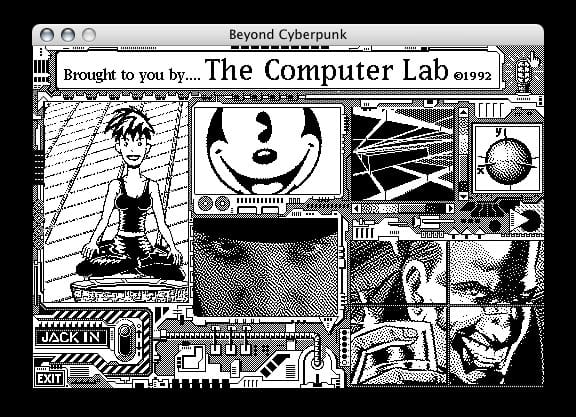
In 1987, engineer Bill Atkinson dropped acid, had a vision and wrote HyperCard. He then gave this software to a major corporation you may have heard of on the condition it be shipped free with every Mac. This software was the first truly viable hypermedia system, ahead of the web by nearly a decade. It showed us what was possible, and it changed the world.
Not unrelated, Atkinson is also responsible for my favorite type of dithering (yes I'm that kind of nerd). After dithering, after Hypercard (And after the invention of the menu bar, the QuickDraw library for Mac, PhotoCard and the "marching ants" selection box), Bill Atkinson founded a company called "General Magic" to make Extremely Cool Shit, which he did until the tech industry strip-mined it, consuming everything of value and then auctioning off the rest. Atkinson died of pancreatic cancer last year.
There's something utterly incredible and inspiring to me about the original creator-energy of that era of computing where we solved interesting problems from scratch and then made them as accessible as possible because we were trying to manifest the kind of world we wanted to thrive in.
This approach is so different from literally every tech effort right now, obsessed as we are with insulating ourselves from the pain of failure with a monetization funnel. It's not just different, it's anathema, the forgotten punk shadow too scary, too chaotic and too unstructured to imagine it ever produced well... everything we now consider worthwhile.
This lost chaotic-optimistic vision of technology is still present - it's foundational - but it's buried so deeply I don't recognize where I am anymore.
Recently I've started using Claude AI a bit for coding assistance and it's a nice sidekick, and I worry daily that people will miss the fact that Large Language Models (the technology behind what we call "AI" these days) are simply probability models which return the most likely sequence of X follows Y. The ability to calculate those probabilities depends on the existence of lots of exchanges. You need what we call a corpus of training data.
Put simply: you need to know that most of the time when people say "good" it is followed by "bye" (or "boy") but rarely "eyeball" or "software." You know this by observing and counting, and that's what all the massive amounts of compute are for.
But while there's been a lot of work on so called synthetic training sets, there really is no replacement for observing the real world if you want this all to make sense, otherwise you collapse into a larsen-effect loop of self-congratulatory hallucination and tail-chasing. It's not a bug, it's how the system works.
To the extent that any of these AIs "think" at all, it's because the models have strip-mined the last two decades of internet conversation. The conversation that we used to have in public. All of the blog posts, commentary, free software and detailed debates, RFCs and white papers. Free documentation and APIs and Stack Overflow posts. And now, as far as we can tell, this collective generative activity has almost completely ceased to be.
We have stopped talking to each other on the open channels.
We don't "need" to anymore.
We definitely don't want to anymore.
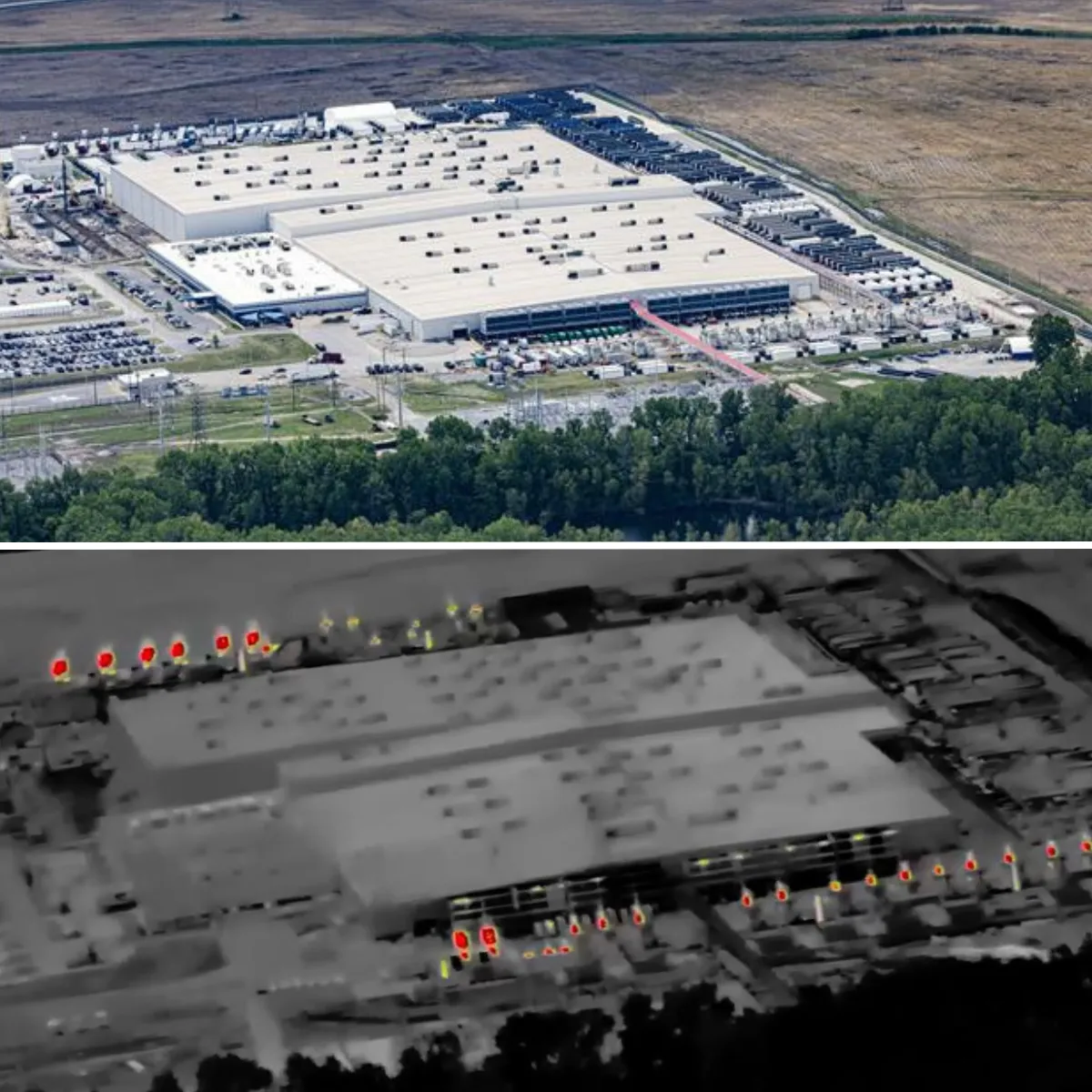
The current moment is so incredibly extractive, it has converted every ounce of human care, kindness and creativity into a "model," which we then burn as much fossil fuel as possible to convert into a subscription service. We are being asked to pay for a chopped-and-screwed memory of the time we used to live in a semi-functional society.
We are, effectively, being fracked to death. And this isn't an impending collapse, it's already happened, we're just living out the consequences right now.
It's not the internet that's dead, it's the entire tech industry and it wasn't an accident, it was a murder to try and cash in on the life insurance money. We're not into late-stage capitalism, we're fully in The Jackpot, and I fear nothing will ever get any better than it was about two years ago, when we ingested the entire program into itself and then just... gave up... trading all of our living friends for their ghosts.
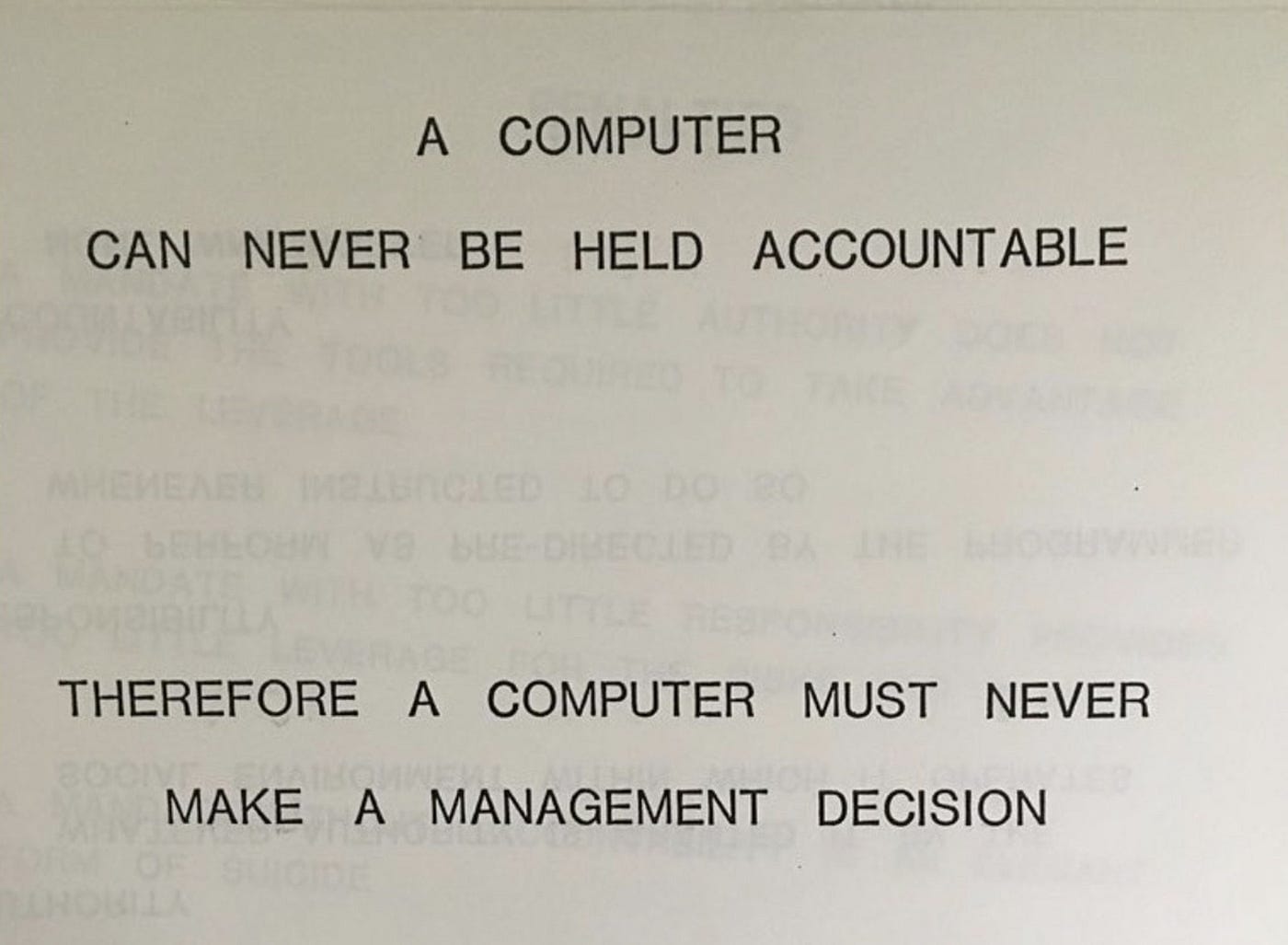
It seems increasingly likely that we're locked in a death-cult-groundhog-day timeloop now, forever, remixing only hit-parade records from 2023 again and again and again and again and again until we're convinced they're new.
I almost miss the era when there was a shitty startup every week.
Do you remember 2002's Blow the Dot Out Your Ass?
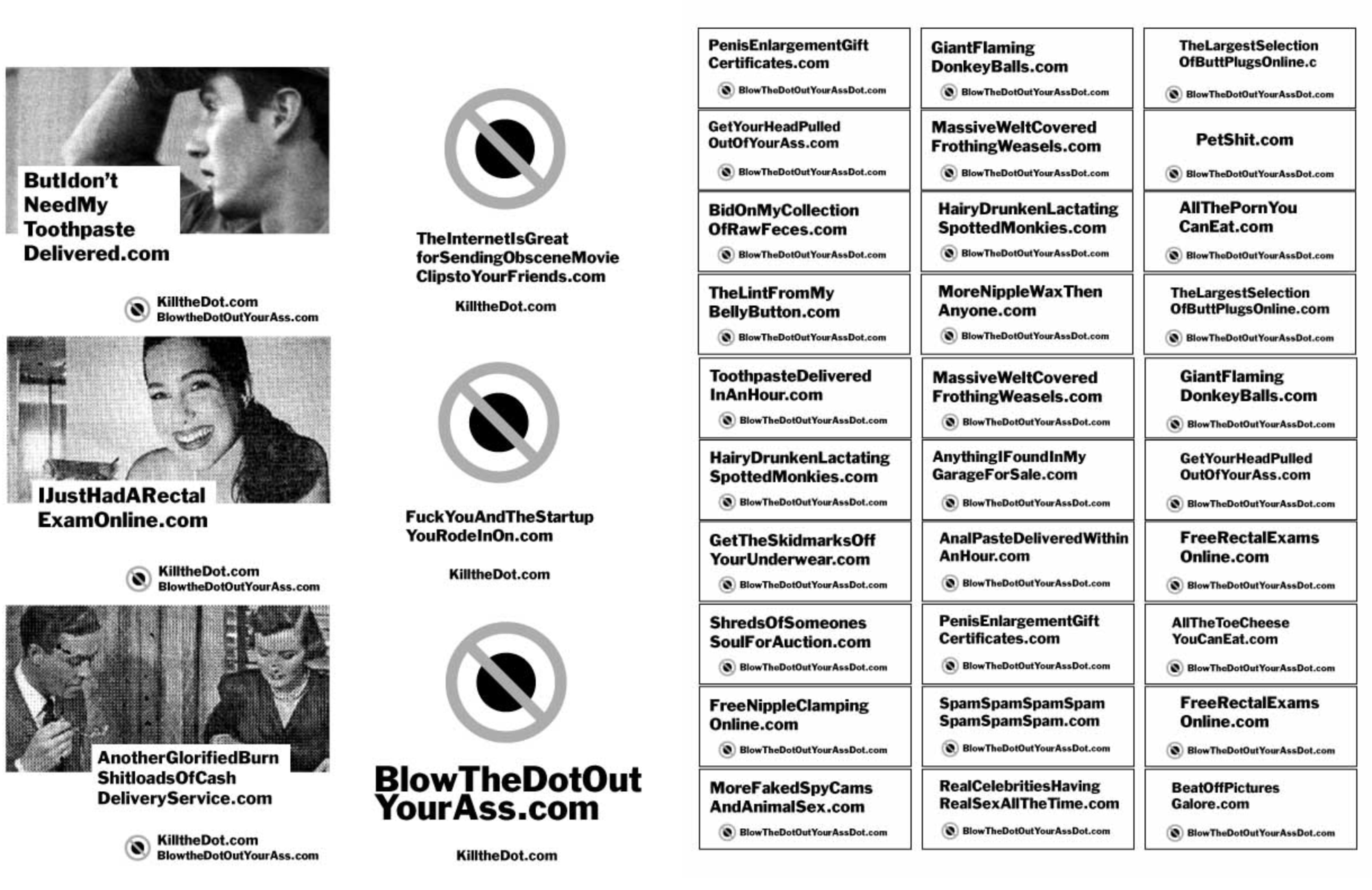
It seems fitting the site is now the home to domain name squatters.
II.
From where I sit, my experience in tech feels like early-onset cultural dementia.
I have memories. Vivid ones, of living in a different country, a different city, a different planet. I look at screenshots and photographs of life from as little as 18 months ago and it becomes difficult to believe that future ever existed. I don't even feel right in my body, nothing seems to work, everything previously solid seems damaged, unstable, treacherous and unreliable. Things have glitched, gone sideways, completely wrong timeline. I'm told I'm wrong, that things are fine, that this is normal. We've always been this way.
So this might be just old-man shit, but I think the word I'm looking for is: bereft.
I'm sad, ok? Depressed even, but writing that on the internet I know to expect a wave of advertisements for temporary chemical solutions to a permanent problem on my Amazon-health feed. Youtube is going to be flooded with supplements, all Podcasts sponsored by BetterHelp and if I'm really lucky I'll get an automated trust-and-safety compliance "the platform cares" message emailed to me with a link to a list of insurance-approved help lines.
Ok sure but fucking hell, we lost something.
We really ought to mourn it?
All of my friendsToo many of my friends are dead
andallan awful lot of my enemies are in power.
I've a new mix, it's a goodbye of sorts that I've been looping for myself long enough a couple of these tracks made it into my annual Spotify surveillance report. I guess that's meaningful now.
I made this quite a while ago, but then I couldn't find a platform I felt comfortable publishing it on, so I had to go build one first, let me know what you think:
III.
Billionares are a symptom of systemic failure and are inherently boring (even if they're dangerous). I don't want to talk about why I'm an internet a ghost these days, but I'm Not Really Here, and I'm surely not on Twitter, and I'm a little on Bluesky, but I'm mostly in Actual Reality, which is grounding and comforting and also terrifying and difficult and complicated. In fact I don't think I'm anywhere at all and have never felt quite as lost. Hyper-normalization is about all I've got.
I don't know what it means to Produce Content which I understand is the only language that's really spoken these days (and more likely to power an AI than reach a human anyway). I don't know who listens and who cares, but the old ways are all blocked and broken, so just going to keep yelling in my own head and slamming my hands against a keyboard until occasionally things spill out.
And what's spilling out right now is this: I was there when the deep magic was being written. I'm betting a lot of you were too. That moment was real.
We need to start rebuilding (yesterday) for the post-shittification era.
We need to focus on reconstruction.
Now.
This is difficult because: 1. I'm really sad and quite a bit banged-up, which is not a good starting point for a new venture. 2. I'm equally confident we haven't seen the worst of this yet. You can reasonably expect the beatings, executions and kidnappings in the streets to continue.
I also think this probably means whatever you're working on (or want to be working on)? It's probably an improvement.
"What are we supposed to do? What is there to hope for at the end of this time? Why brother trying to patch up the world while so many others seem intent on wrecking it?"
A good friend shared this article about refugia with me, it's the most encouraging thing I've read in a couple of years, maybe especially because I can't locate any of them right now. I can't see any signs of life at the moment, but I'm not quite ready to give up looking.
Consider this a flare. I'm going to keep sending them up until the box is empty.
---
My mood is pretty somber at the moment, but I can't leave you there. Here are three things I think are worthwhile:
• BasisVR is a community-driven, creator-centric bid to return VR development to the people who actually deserve it. VR is an unusual technology in the history of innovations in that it was never really allowed to have a nascent development period. The moment that the technology became viable it was owned, put to work and then declared a failure, at a scale and scope so breathtaking I don't ever think it will ever recover. We never got to really see what was possible. What if we had a do-over?
• The Hardest Working Font in Manhattan is a deep-dive on the font-which-is-not-a-font and one of my current obsessions. This article itself is also inspirational whether you care about typography or not. It's an example of the kind of info-dumps I used to love the web for: factual and true and well researched, and it's backed by some of the best hypermedia I've seen in an article - interactive illustrations and photography and videos, all shared on a personal blog, with no advertising or app downloads in sight. Now that's what the internet is for.
• Here's another deep dive on Ditherpunk, or monochrome image dithering. I didn't write much about it, but this newsletter is (in sprit and in illustration) all about the dithering. The aforementioned Atkinson is my favorite (I actually built a tool here several years ago for an unrealized project if you want to play with it yourself).
What I like most about dithered images is that they simultaneously are lossy and more truthful: you can see how much information has been thrown out, and yet they feel emotionally closer to reality than the sharpest of high-res 4k renders. I think it's likely because our emotional states, stories and memories owe more to the gaps we fill in with our minds than the data recorded.
There is truth and beauty in loss, and memory requires forgetting, something impossible for an AI.